Thursday, February 19, 2009

A Secret Garden, Sicilian Style


The Leopard, written by Giuseppe Di Lampedusa (and published posthumously), is set in 1860's Italy. The novel is about the last gasp of the corrupt Sicilian aristocracy in the face of revolution.

I stumbled--no wandered--into this gorgeous description of the palace garden page 9 ff]--a metaphor for the rotting state and ruined finery of the aristocracy [in bold: the super-gorgeous]:

...its seclusion gave it the air of a cemetery...plants were growing in thick disorder on the reddish clay; flowers sprouted in all directions, and the myrtle hedges seemed put there to prevent movement rather than guide it....every sod seemed to exude a yearning for beauty soon muted by languor. But the garden, hemmed and almost squashed between these barriers, was exhaling scents that were cloying, fleshy, and slightly putrid, like the aromatic liquids distilled from the relics of certain saints; the carnations superimposed their pungency on the formal fragrance of roses and the oily emanations of magnolias drooping in corners; and somewhere beneath it all was a faint smell of mint mingling with a nursery whiff of acacia and the jammy one of myrtle; from a grove beyond the wall came an erotic waft of early orange blossom. It was a garden for the blind: a constant offense to the eyes, a pleasure strong if somewhat crude to the nose. The Paul Neyn roses, whose cutting he had himself bought in Paris, had degenerated; first stimulated and then enfeebled by the strong if languid pull of Sicilian earth, burned by apocalyptic Julys, they had changed into things like flesh-colored cabbages, obscene and distilling a dense, almost indecent, scent which no French horticulturist would have dared hope for. The Prince put one under his nose and seemed to be sniffing the thigh of a dancer from the Opera.
Hot in here, or is just me?

Friday, February 13, 2009

Cheatin' Heart Flower

Digitalis, the heart medicine, comes from Foxglove, or as the Latin-spouting gardeners say, Digitalis purpurea. But I didn't know the Foxglove flower has, for centuries, symbolized deceit. Makes sense, though.

Deceit + Digitalis purpurea = cheatin' heart.

Here's a hilarious guide by illustrator Jason Logan on the modern meanings of our posies.

Wednesday, February 11, 2009

The House Wine of the South

Here's a recipe for success: sweet tea and vodka. In one bottle.

South Carolina's own vodka distillery has made a splash-- as evidenced by today's article appearing in the NYT's Dining section: "A Southern Twist: Tea Infused Vodka." ["The house wine of the South is how Dolly Parton's character in Steel Magnolias describes" sweet tea.]

Can't wait to mix a "Mo-tea-to"-- that's Firefly Sweet Tea Vodka over ice, lime juice, mint leaves and soda water.

One word of caution, though. If you're going to grow your own mint-- and fresh mint leaves MAKE a mojito-- grow it in a container. Even then, watch it-- mint has been known to scale walls and leap over pots. Mint is one of those plants with LEGS-- invasive doesn't even begin to describe it. Plant mint in the garden and you're gonna MOW it. And no one wants a MOWito, right?

Saturday, February 7, 2009

Grow Some Abundance

Your Zen Moment for the Day:

The hoarder mindset is everywhere these days-- the fear of not having enough. Yet most of those economic wonks on the news admit that human psychology drives the economy. Maybe we need a little less human and a little more animal, according to this book:
“The term ‘animal spirits,’ popularized by John Maynard Keynes in his
1936 book ‘The General Theory of Employment, Interest and Money,’ is related to consumer or business confidence...It refers also to the sense of trust we have in each other, our sense of fairness in economic dealings, and our sense of the extent of corruption and bad faith. When animal spirits are on ebb, consumers do not want to spend and businesses do not want to make capital expenditures or hire people.”
In Zen-speak, that's all about creating abundance. Not enough money? Or Time? Get the well-being flowing: here are 6 ways to create the abundance mindset.

Friday, February 6, 2009

My Victory Garden: The Ultimate Grassroots Movement

Last year, I replaced my front lawn with flowers and and a vegetable garden-- pictured here.


No wonder I'm a fan of the Victory Garden Initiative "a grassroots movement encouraging you, yes you, to move grass, grow food. Victory Gardeners believe there is no better place to grow food, than in your own yard."

The neighbors' varying reactions are a subject for another blog. But by the end of the summer, the mailman, Fed Ex carrier, and many neighbors had tasted the organic tomatoes-- it was a great summer for tomatoes, if I do say so myself--and you can't complain when your mouth is full.

Thursday, February 5, 2009

Chill Out


Otto--to the right, with the gorgeous coat-- is a little confused here by the frozen fountain. We don't get ice that often.

My lily pads are toast. Frozen toast. Don't think they'll winter over, but who knows. The spout still burbles through a wee hole in the ice, enough chortling to entice a flock of cedar waxwings to swoop in for a drink.

Stock markety weather: 19 degrees last night, but supposed to be in the mid-60's this wkend.

In other news-- besides poring over seed catalogs, I've been reading--and rereading-- three craft books on writing to brush up for the Writing Your Novel seminar I'm teaching later this month. Among them: The Lie that Tells A Truth by John Dufresne-- his chapters on first drafts and flash fiction are especially insightful. I do recommend his book for sharpening the saw...so to speak.

Tuesday, February 3, 2009

The Peanut Man Done It

News about that Georgia peanut factory scandal is just getting worse. Salmonella is serious. Who wants roach parts and rat stuff in their peanut butter? (Certainly gives a new meaning to "extra crunchy.")

I don't wanna be an I-told-you-so, but I buy organic peanut butter. Sometimes I even go to that little machine thingy they have set up in produce where you grind your own peanuts. Anything to avoid seeing that...Peanut Man on a label.

I mean, since I was a kid, I knew he had the creep factor going on. Look at that lascivious grin, and he's wearing a monocle for God's sake. Sabotaging the competitor's vat of peanuts? Clearly he'd be up to such a task. They don't call him a goober for nothing.

And speaking of lascivious. That Nasonex bee is pure smarmy. Not like REAL bees: industrious creatures who enjoy rolling around petals like sultans in silk and scooping up stickly pollen with their tiny bucket knee caps. This is a CORPORATE drone, a lecherous bee with, for some reason, a Latin accent--but instead of Corinthian leather, he purrs on about allergies, and he has this weird segmented, pulsating body. Don't look too closely at the shape of that Nasonex container either.

Wouldn't be surprised to see these two on the next Catch a Predator.

Sunday, February 1, 2009

I Love the Smell of Compost in the Morning


February 1st-- that's really the start of spring round here. Right now the biggest thing I'm growing is my compost pile. Pictured at left.

The best thing about composting is that you can add all kind of gross stuff and, ta da, you get gorgeous black gold. Along with kitchen scraps, tea bags, coffee grounds, fall leaves, you can empty your vacuum cleaner bags and dryer lint-- and best of all-- stir in some shredded bills and rejection letters.

Will be spreading compost soon, so I can go from this:
To this:

Tuesday, January 27, 2009

Writing Room Spring Schedule

January...the perfect time to pore over seed catalogs and sow the seeds of creativity. Let your writing burst into bloom this spring:

The WRITING ROOM: SPRING 2009 SCHEDULE

The Writing Room is sponsored by the Emrys Foundation. Visit www.emrys.org for info.

Seminar: Out of Your Mind…And Onto the Pages

Mindy Friddle and Heather Magruder

This workshop is designed to stimulate creativity and generate ideas for fiction and nonfiction. We’ll use a series of short in-class writing exercises to inspire new work and deepen your writing. Come prepared to write in class, to share your exercises without fear or self-judgment, and above all, have some fun.

Saturday, February 21

2-4 pm

Location: Cleveland Street Branch YMCA

721 Cleveland St

Greenville, SC 29601

Cost: FREE. Space is limited, so please register.

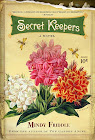
Mindy Friddle is founder and director of the Writing Room. Her novel, The Garden Angel (St.Martin’s Press/Picador), was a Barnes & Noble “Discover Great New Writers” selection. Her second novel, Secret Keepers, is forthcoming from St. Martin's Press in May.

Heather Magruder is a freelance writer, teaching artist and workshop facilitator. Her fiction has twice won the Piccolo Spoleto Fiction Open. She has presented writing and arts integration workshops across the country.

Writing Picture Books and Young Adult Novels

(Or… It’s a Cartoon Dog Eat Cartoon Dog World)

Melinda Long

If you always wanted to put that special children’s story your parents told you, or the one you made up for your own kids on paper, then this workshop is for you. Maybe you just enjoy the delightful story-telling qualities of a good picture book or young adult novel. Learn the basic skills and deeper complexities of writing a quality, marketable picture book or young adult novel and how to begin the publishing process. The emphasis of this course will involve picture books with a section of time spent on writing for young adults.

For beginning and intermediate writers

Six weeks, Tuesdays

Starts Tuesday, February 24

6:30 – 9 pm

Cost: $180; $170 Emrys members

Location: Innovate Building Conference Room, 148 River St. Greenville

Melinda Long is author of New York Times Bestsellers, How I Became a Pirate and Pirates Don’t Change Diapers.

Don’t Bother Me. I’m Reading.

Scott Gould

The first—and perhaps most important—step to becoming a decent writer is to become a decent reader. It’s one of the immutable laws of the literary universe: To excel at fiction you have to write a lot of words…and read a lot of words. In this course, we’ll concentrate on the reading part. We’ll read and examine amazing works of fiction, both classic and contemporary. And we’ll examine these works from a craft standpoint, allowing you to learn techniques that will ultimately inform your own fiction. But wait! Don’t order yet… because we’ll also provide weekly writing prompts, helping you generate ideas for future stories. The goal? To provide you with a solid, valuable reading foundation and a catalog of new story ideas.

Eight Weeks, Wednesdays

Starts Wed. Feb 25 [no class March 18]

6:30-9 pm

Location: Governor’s School for the Arts and Humanities, downtown Greenville

Cost: $240; $230 Emrys member

Scott Gould is Chair of the Creative Writing Department at the S.C. Governor’s School for the Arts & Humanities. His poetry, fiction and nonfiction have been published in magazines and anthologies including Kenyon Review, Kansas Quarterly, Carolina Quarterly, Black Warrior Review, New Stories From the South, and New Southern Harmonies, among others.

Seminar: Writing Your Novel

Mindy Friddle

How do you go about constructing a novel? Where do you start? How do you avoid getting bogged down in the middle? Some novelists balk at the idea of adhering to a framework, and don’t discover what happens in their novels until they’ve completed a draft. Others find following guidelines and rough outlines frees them up to focus on the flow of ideas. It’s helpful to discover which kind of writer you are. In this seminar, we’ll explore strategies not only for constructing a novel, but ways to navigate the immensity of such a long work. Using in-class writing exercises, samples from master writers, and discussion, you will be inspired and motivated to start—or finish-- your novel.

Note: Students are asked to bring along one favorite novel to the seminar. The novel can be of any kind—literary, contemporary, classic, mainstream, thriller, horror, young adult, romance—the only stipulation: a published novel you have read and count among your favorites.

One-day Seminar: Saturday, Feb. 28, 1-5 pm

Location: Vino 100 , Five Forks Promenade 2531 Woodruff Road Simpsonville, SC

Cost: $100; $95 Emrys members

Quality champagne and wine served throughout for $4-$6 a glass, and cheese platters available for purchase.

Mindy Friddle is founder and director of the Writing Room. Her novel, The Garden Angel (St.Martin’s Press/Picador), was a Barnes & Noble “Discover Great New Writers” selection. Her second novel, Secret Keepers, is forthcoming from St. Martin's Press in May.

Fiction in a Flash

Heather Magruder

The “short short” story of 250 to 1,000 words, or “flash fiction,” has a market. More and more contests and literary publications, both print and online, have shifted their focus to include (or focus exclusively upon) flash fiction. Over three sessions, we’ll explore ways to craft a full story in just a few hundred words. We’ll read excellent examples of flash fiction, generate our own writing, and explore ways to pare down the word count while ramping up the energy of our stories. Also covered: how and where to submit your own piece of flash for publication.

Three Weeks, Thursdays

April 16, 23, 30

6:30-8:30 pm

Location: Innovate Building Conference Room, 148 River St. Greenville

Cost: $90, $85 Emrys members

Heather Magruder is a freelance writer, teaching artist and workshop facilitator. Her fiction has twice won the Piccolo Spoleto Fiction Open. Heather is on the South Carolina Arts Commission’s Artist Roster, is listed on Southern Artistry and is currently enrolled in the MFA program at Queens University. She has presented writing and arts integration workshops across the country.

Sunday, January 25, 2009

Winter Blooming


Lenten Roses in my back shade garden this week and the exquisitely perfumed winter jasmine.

"The courage of some small and apparently fragile flowers never ceases to amaze me. Here are we humans, red-nosed and blue-cheeked in the frost and the snow, looking dreadfully plan; but there are the little flowers coming up, as brave and gay as can be."--Vita Sackville-West

Couldn't have said it better myself.

Monday, January 19, 2009

Can we talk about writing about talk...?

All the information you need can be given in dialogue.
- Elmore Leonard

I taught a seminar on Writing Dialogue for the Writing Room on Saturday. Preparing and leading a writing seminar on a craft element always turns out to be a big refresher course for me.

Here are a few notes from the seminar:
What is dialogue? Dialogue is conversation between two or more characters.
1. One mark of good written dialogue is that it is doing more than one thing at once:
• Advancing the plot
• Revealing character
• Providing “subtext”

Subtext
is what's not said but implied. Dialogue is often a mask for unexpressed feelings. Or even for lying. People frequently don't say what they mean. It makes for interesting dialogue if the reader knows that someone isn't saying what she means, or is lying. It creates tension.

2. What is not said is as revealing as what is said, especially regarding emotion. People in crisis are often at their least articulate. Think about it: The rhythm of speech changes according to our emotions. An angry person will be short and sharp. A person in love will be long and languid and dreamy.

3. As Francine Prose mentions in her book, Reading Like a Writer, dialogue in fiction is better than "real" dialogue. Fictional dialogue should be an improved, cleaned up, compressed, economical, and smoothed-out version of the way people talk. And yet, it should sound "natural."

4. Dialect is challenging and easy to overdo. "Dialect should always be achieved by word choice and syntax, and misspellings kept to a minimum. They distract and slow the reader, and worse, they tend to make the character seem stupid rather than regional." --Burroway, WRITING FICTION

Good examples of dialect (where syntax makes dialect clear): "Don't rush me none."
"Run up yonder and tell her."
Bad example: "Doan rush me nun, Ah be gwine." (caricature)
Ron Rash (ONE FOOT IN EDEN), Richard Price (LUSH LIFE) and Annie Proulx ("Brokeback Mountain") are writers who are masters of dialect.

5. A few ways to improve your dialogue writing skills:
Eavesdrop. Start paying close attention to people’s conversations in public places. Write down snippets or intriguing lines in a journal.
Read your dialogue aloud "to make sure it is comfortable to the mouth, the breath, and the ear. If not, then it won't ring true as talk." --Burroway, WRITING FICTION.
Also, have people read your dialogue to you. You’ll be able to hear the rhythm and cadence of the sentences, how easy it is to pronounce the words and syllables, how long each character’s dialogue is.
Keep Practicing. The best way to improve dialogue writing skills is to read it (you’ll learn to spot and pay attention to authors who are good at writing dialogue) and to write more dialogue. The more you practice writing it, the more you’ll come to understand the cadence, rhythm and timing of natural-sounding dialogue.

Oh, and Happy MLK Day everyone.

Monday, January 12, 2009

Good News Monday

It's Monday, the perfect day to post some great news to start the week off. There's a lot of good going on in the world, ya'll:

1. Fiction Readers
Fiction reading is UP UP UP according to the newest report form the National Endowment for the Arts. Here's the NYT article, "Fiction Reading Increases For Adults" with the details: ..."the proportion of overall literary reading increased among virtually all age groups, ethnic and demographic categories since 2002. Increased most dramatically among 18-t0-24-year-olds, who had previously shown the most significant declines." Yay.

2. Vegetarians. I love that the younger generation is SO into caring for the Earth. Young folks are the new stewards of the environment who take their roles to heart. Here's more from ABC News about a new report from the Government: 1 in 200 kids are vegetarians-- the main reason? Concern for animals. Oh, my children, you rock!

3. Spring Bulbs
Those harbingers of spring-- and hope--the narcissus and daffodil bulbs are up...in January. Elizabeth, a character in my first novel, The Garden Angel, thought of them as "green fingers reaching skyward." Here's an emerald hand, beside the stone possum, from my back garden:
eXTReMe Tracker