Welcome to Novel Thoughts!

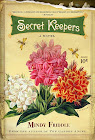
Visit www.mindyfriddle.com for more information on SECRET KEEPERS and THE GARDEN ANGEL.

Thursday, November 26, 2009

On Taking a Breather

What's good about Thanksgiving? You can be grateful for everything, and realize what a looooong list that is. You can step out of routine, even for a day.

A little micro-sabbatical is a good thing. That's my excuse, anyway.

Take a breather.
Because sometimes 'you need to let the toilet tank fill up.'


And drop your schedule, let your tasks go ...let the mind go fallow-- for a day or so.
No emailing, no Tweeting, just a wee bit o' blogging.

Read, eat & drink, take walks, read, read, drink, read. Repeat as necessary.


Speaking of recent reads:

I finished The Girl with the Dragon Tattoo and loved it. A thriller, a crime novel, a page-turner, set in Sweden. I'm just sorry the author didn't live to see it published.

Also read Julia Glass's The Whole World Over. Compelling, too. Saga is my favorite character.

I expect to finish a classic horror novel tonight [yep, genre-wise, my reading list is a smorgasbord], The Haunting of Hill House by Shirley Jackson. How did I miss reading this? What an exquisite, creepy, entertaining novel!

And to leaven the darkness, I'm ploughing through Jill McCorkle's gem of a short story collection, Going Away Shoes.

Thursday, November 19, 2009

On Creating a Sense of Place


Nothing happens nowhere. Characters don’t live in a vacuum. That would suck!

Weather, locale, geography, culture, period, history, time/season—all create a sense of place. Setting--the time and place in which a story, play, or novel occurs--is one of my favorite craft elements.

Why?

I think Georgia O'Keeffe said it best: "One day seven years ago I found myself saying to myself — I can't live where I want to — I can't go where I want to go — I can't do what I want to — I can't even say what I want to … I decided I was a very stupid fool not to at least paint* as I wanted to." *Substitute the word "write" for "paint"...and you, um, get the picture.

Here are a few masterful examples:

Margaret Atwood, The Handmaid’s Tale: A chair, a table, a lamp. Above, on the white ceiling, a relief ornament in the shape of a wreath, and in the center of it a blank space, plastered over, like the place in a face where the eye has been take out. There must have been a chandelier, once. They’ve removed anything you could tie a rope to.
Gabriel Garcia Marquez, Love in the Time of Cholera: Independence from Spain and then the abolition of slavery precipitated the conditions of honorable decadence in which Dr. Juvenal Urbino had been born and raised. The great old families sank into their ruined palaces in silence. Along the rough cobbled streets that had served so well in surprise attacks and buccaneer landings, weeds hung from the balconies and opened cracks in the whitewashed walls of even the best-kept mansions, and the only signs of life at two o’clock in the afternoon were languid piano exercises played in the dim light of siesta. Indoors, in the cool bedrooms saturated with incense, women protected themselves from the sun as if it were a shameful infection, and even at early Mass they hid their faces in their mantillas. Their love affairs were slow and difficult and were often disturbed by sinister omens, and life seemed interminable. At nightfall, at the oppressive moment of transition, a storm of carnivorous mosquitoes rose out of the swamps, and a tender breath of human shit, warm and sad, stirred the certainty of death in the depths of one’s soul.
Jayne Anne Phillips, Machine Dreams: He’d longed to see an oak tree, a big oak with layers of limbs and summer leaves moving in wind . . . he’d wanted to see that, and women in dresses and stockings and heels. The palm trees were strangest at night because they were so big and womanly, tossing themselves and sighing, while the women in the camp wore fatigues and boots. 41st Engineers had arrived to construct the ramp and the airstrip, and the native men had still worn grass skirts. The skirts rustled as the dark men walked, their flat-footed storkish gaits rustling the grass in a way that was stern rather than girlish. . .The natives were in the camp at all hours and the skirts came to seem natural above their early hairless, muscled calves, natural on them rather than on the women, so that the outward things distinguishing men and women lost meaning. You noticed instead the wrist of a Red Cross girl, narrow and flat in the masculine greenish cuff of a fatigue shirt. The whole world was turned around like that. . .
Toni Morrison, The Bluest Eye: School has started, and Frieda and I get new brown stockings and cod-liver oil. Grown-ups talk in tired, edgy voices about Zicks’ Coal Company and take us along in the evening to the railroad tracks where we fill burlap sacks with the tiny pieces of coal lying about. Later we walk home, glancing back to see the great carloads of slag being dumped, red hot and smoking, into the ravine that skirts the steel mill. The dying fire lights the sky with a dull orange glow… Our house is old, cold, and green. At night a kerosene lamp lights one large room. The others are braced in darkness, peopled by roaches and mice.
Robert Morgan, Gap Creek: Where somebody has buried cabbage, all you see is the roots sticking out of the ground like pigtails. Cabbages are buried upside down. I looked in the stubble along the edge of the garden, and in the edge of the orchard beyond the hogpen. There was loose dirt and weedstalks where the taters had been dug up, but I didn’t see cabbage roots. I searched along the pasture fence and didn’t see no buried heads there either.
Brock Clarke, An Arsonist’s Guide to Writers’ Homes in New England: There were no trees anywhere—it was as though Camelot had been nuked or had been the brainchild of the logging industry maybe—and each house was exactly the same except that some had powder blue vinyl siding and others had desert tan. There were elaborate wooden playgrounds in the backyards and mini-satellite dishes on every roof, and each driveway was a smooth carpet of blacktop and there wasn’t a sidewalk crack to trip over because there were no sidewalks, and each house had a garage that was so oversized it could have been its own house.

Ray Bradbury, The Martian Chronicles: It was quiet in the deep morning of Mars, as quiet as a cool black well, with stars shining in the canal waters, and breathing in every room, the children curled with their spiders in closed hands.

Monday, November 16, 2009

On works-in-progress


Is there any wonder why a Work in Progress is also known as a WIP?

Because it stings, my pretties. It stings. It flays, it smarts. You think-- this WIP is tearing me to shreds! I can't go on... Help me, help me. This draft is killing me! Yes, you have a regular ol' pity party. That's before you can even think about how you're going to have to whip it good, into shape, shape it up...

A rough, rough chunk of something I've been working on...my stinging WIP:

How were we going to raise these children without a man? Without much at all? We were house poor, I knew that’s what they called us, but I thought of us as home rich. I always will.

We had a big vegetable garden and Azie and I canned and put up food all summer. Some nights when I couldn’t sleep, I stood by your bedrooms listening to your steady breaths, and I tiptoed downstairs to the kitchen. In the pantry, I ran my hands across the shelves of fig preserves and apple butter and stewed tomatoes. Those murky jars were like gold to me, an abundance that would get us through. I’d even go down to the basement some nights, tiptoe over to the deep freezer in the shadowy corner, a box like a coffin, but I would open it, and there was light and life—heaps of frozen corn and string beans, bags of okra and carrots, peas and butter beans. In that way, I kept an inventory of our blessings and I knew we would be all right.

Sunday, November 15, 2009

Chasing Butterflies: Nabokov

Continuing on the topic of the gritty work of process... on the cogs and wheels of grinding out drafts...on HOW one goes about writing a novel [and an ode to the usefulness of index cards]:

Vladimir Nabokov , lepidopterist, left behind an unfinished novel, The Original of Laura, when he died. It's just been published-- the fragments of it, anyway, as David Gates notes in his review today in the NYT Book Review.

The most poignant detail is Nabokov's struggle to finish the manuscript, to capture the vivid vision of the novel --like one of his treasured, rare butterflies-- and splay it on the page: “I kept reading it aloud to a small dream audience in a walled garden. My audience consisted of peacocks, pigeons, my long dead parents, two cypresses, several young nurses crouching around, and a family doctor so old as to be almost invisible..."

This novel isn't even half-baked. Apparently, it's still clumps of dough. But fascinating to scholars and to writers who will seize the chance to muse over the raw chunks, and glimpse, perhaps, how Nabokov worked:
He would customarily 'envisage a novel in his mind complete from start to finish before writing it down' — on 3-by-5 cards, which allowed him to work on any section he wanted to, then place it 'in the sequence he had foreseen, among the stack already written.' A transcription of . . . handwritten notecards (complete with grammatical and spelling errors), [are] arranged in [this novel in] sensible, if debatable, order, but facsimiles of the cards themselves, perforated so they can be detached from the book and reordered by scholars who think they know better, or by general readers with time on their hands.

Tuesday, November 10, 2009

On Writing Daily

Isak Dinesen
Write a little every day, without hope, without despair.
Isak Dinesen

Words of wisdom from Isak...a succinct way of advising one should write without expectations, "relinquishing the fruit of action," in Bhagavad Gita terms. The joy in performing an action is much greater than the joy you get from the fruit of the action.

Of course, Isak is also quoted as saying, "A great artist is never poor."
Hmmmm...

Saturday, November 7, 2009

PW Head Scratcher


From the WTF? file...

A real ball-- I mean head scratcher.

Publishers Weekly announces its Top Ten Books of 2009. Not one woman author on the list. Really, PW? Really?

Friday, November 6, 2009

Novel Ways to Write a Novel

Colored string, highlighters, bulletin boards, subway rides, voice recorded software, bathtubs, 1940's Royal typewriters, park benches, piles and piles of index cards, 14-pt courier font, snatches of eavesdropped conversation on cocktail napkins, Mac laptops, rat-infested basement apartments, refurbished studios, blue exam notebooks, magazine photo collages...

All part of the novel writing experience...and it is an Experience, capital E, according to this WSJ article, How to Write A Great Novel. What a fascinating look at the range of ways novelists--from Junot Diaz, Margaret Atwood, Edwidge Danticat, Richard Powers, Laura Lipman, and more...get 'er done.

One of the online comments followed up with a perfect quote from Somerset Maugham: "There are three rules for writing the novel. Unfortunately, no one knows what they are."

Wednesday, November 4, 2009

On Owls.. and two movies

Right before dawn, 5:45 AM, there's a hoot owl that announces himself near my bedroom window.

He sounds like, Whooooo Coooooks for Youuuuu? Who Cooooooks for Youuuuu?

His call is authoritative and spooky...mournful and powerful.

I heard someone once say they mistook an owl's call for a woman in distress. "I nearly called the authorities. I just pictured some naked, mad woman out there, screaming for help." Once you hear an owl, you don't forget it.

Two movies out: one I recommend, the other...not so much.

Bright Star-- a must see. Written and directed by Jane Campion. A love story about the short, brilliant life of John Keats and the girl next door, but more than that, an ode to the power of poetry. You'll come home wanting to re-read Keats...dig up that old college anthology on the Romantic Poets.

Where the Wild Things Are...I love the book, of course.And I'm a fan of director Spike Jonze's work, particularly Being John Malkovich. But I guess I'm one of the few not wild about the movie. It has its captivating moments, but it struck me as violent, anger-fueled, testoterone heavy...and sad. Entirely the point, I suppose. But hitting owls with rocks? Chopping down trees? Rock fights? Oh, boys, all you talk about is war, war, war. I dunno. I preferred Pan's Labyrinth-- a violent tale centered around a child, but in the end redemptive, too.

Tuesday, October 27, 2009

Radical Revisions

I promised to touch on some highlights of Lauren Groff's seminar, "After the First Draft." The three-hour seminar on Sunday was sponsored by the Writing Room and the Emrys Foundation. Lauren is the author of the NY Times Bestselling novel The Monsters of Templeton and the prize winning short story collection, Delicate Edible Birds. But you knew that, right?

Lauren had some terrific things to say about revision-- re-visioning-- your draft.

For example, she recommends several "radical ideas" for seeing your work in a new light. From her lecture and handout:

--Turn over your finished stories and start anew. "This is what I do with at least two drafts of everything. Believe it or not, it makes your work stronger, and teaches you to not be attached to the individual text. If there is a metaphor or moment in your first draft that you love and want to hold on to, it may not be necessary if you don’t remember to put it into the second draft. Plus, you can go through the first and cannibalize it for the good stuff."
--Get out the scissors, and cut each paragraph out. "Put the paragraphs in order on the floor, so that you can see your work as a whole, and then shift them around, so that they’re in the proper order. Flannery O’Connor used to do this."
--"If you write by computer, on the draft that has all structural and character questions addressed (the draft in which you’re only concentrating on language), print it out and rewrite by hand, line by line, bearing down hard on your language. Then rewrite back onto your computer.

Sound time consuming? Lauren says these methods save her tremendous amounts of time, by forcing her to see her drafts in a fresh way, and letting the story that wants to be told reveal itself.

Monday, October 26, 2009

Lauren Groff and Deno Trakas read tonight

If you're in the Palmetto State [or even NC], don't miss two fine writers reading from their work tonight for the Reading Room, the Handlebar. 7 pm. In a BAR. With Q&A. Books available for purchase. btw, Lauren gave a great seminar yesterday, on "After the First Draft." More about that--and some great tips-- tomorrow.

Lauren Groff grew up one block from the Baseball Hall of Fame in New York. She graduated from Amherst College and has an MFA in fiction from the University of Wisconsin-Madison. Her short stories have appeared or are forthcoming in several journals, including The Atlantic Monthlyand Ploughshares, and in the anthologies Best AmericanShort Stories 2007, Pushcart Prize XXXII, and Best New American Voices 2008. She received the Axton Fellowship in Fiction at the University of Louisville and has had residencies and fellowships at Yaddo and the Vermont Studio Center. Her first novel, The Monsters of Templeton (February 2008), was shortlisted for the Orange Prize for New Writers. Her second book, Delicate Edible Bird, is a collection of stories. Both books are published by Hyperion/Voice.

Deno Trakas has supported and been supported by Hub City since its first project and is featured in Hub City’s New Southern Harmonies, a collection of short stories. He has published fiction and poetry in more than two dozen journals, including The Oxford American and The Louisville Review. He is the author of two chapbooks, The Shuffle of Wings and Human & Puny. His novel, After Paris, was a finalist for the James Jones Award for a First Novel, and his play, The Old Man and the Tree, won Harvey Jeffrey’s Original One-act Play Contest at Lander University. Trakas has a master’s degree from the University of Tulsa and PhD from the University of South Carolina. An English professor at Wofford College, he serves as director of the writing center and coordinator of the creative writing program.

Tuesday, October 20, 2009

On Handling Criticism...

My guest post on the assigned topic of "criticism" at A Good Blog is Hard to Find:

Criticism?


Avoid looking for it.

Stop Googling yourself! Especially late at night when you think no one is looking. You won’t go blind or grow hair on your palms—well, probably not—but it’s habit forming…and after a while, the thrill is gone, anyway. Save your blocks of isolation for writing--not reading about your writing. ...CONTINUE READING...

Saturday, October 17, 2009

Ode to Book Clubs


I met with three book clubs this week, three days in a row.

It's a great gig-- meeting with people who read and talk about books, ask intriguing questions, ask you to sign their books...and [often] drink wine.

Pictured here is a book club from Anderson, SC. They drove all the way to the Coffee Underground in Greenville to meet with me on Wednesday. The nice waiter took this photo so I could be in the picture, too. [That's me in front with the circle necklace--it's made of recycled cobalt bottle glass from the wonderful "outsider art & funky jewelry" Christopher Park Gallery...TMI I know.]