Showing posts with label the writing room. Show all posts

Monday, February 14, 2011

Writing: A Loooooooong Apprenticeship

In the traditional meaning: "apprenticeship" became prominent in medieval Europe with the emergence of the craft guilds. The standard apprenticeship lasted seven years, from age 14 to 21, for example. [Back then you died at 40, so there wasn't time for career burnout.]

I like to use the word apprenticeship to describe writing, because unless one is enormously freakishly talented at a disgustingly young age, [see The New Yorker's "Writers under 40" ] writing takes years of disciplined writing BIC* to get to a place where you sort of know what you're doing. A disciplined schedule, etc. etc. Sweat, howling pain.

Sort of like a blacksmith in the 1300's.

And once you know what you're doing, you know what you're doing wrong, so you have to learn to be kind to yourself, and patient, even as you squeeze your discouraged/lazy/weary self with an iron grip and shake and say get back to work. 

I don't know exactly where this is leading , except to say I thought of the loooong apprenticeship yesterday when I lead the Writing Room's Community Writing Workshop, and one of the 14 students asked how long it takes to learn to write. [They were a diverse group--from college age to retired.] A trick question. You don't want to discourage new--or returning--writers, but it's fair to say it's a long apprenticeship, darlin' so get cracking.

Which reminds me, too, of one of my favorite quotes, this one from Martin Luther King: The arc of the universe is long but it bends toward justice.

Which, among many meanings, reminds one that patience is a virtue.

*BUTT IN CHAIR


Saturday, November 13, 2010

Tomorrow: Community Writing Workshop

I'm leading tomorrow's Writing Room Workshop: "Out of Your Head and Onto the Pages."

For the price of a Cappuccino,
you can write in class,
and share your in-class creations.

Sunday, Nov. 14, 2-4 pm. Bobby Pearse Community Center, N. Main Park.

These second Sunday $5 workshops, sponsored by the Emrys Foundation and Greenville Parks & Rec, are designed to stimulate creativity and generate ideas. We’ll use a some in-class writing exercises to inspire new work. 

The focus for tomorrow's workshop are beautiful sentences. Great first lines*.

Smart gripping scene starters. Openings-- those shiny cut jewels! 


The stuff's too good not to share. A virtual workshop, maybe? 


*As noted in my previous post on great first lines:

Many years later, as he faced the firing squad, Colonel Aureliano Buendia was to remember that distant afternoon when his father took him to discover ice.
-- One Hundred Years of Solitude, Gabriel Garcia Marquez

Scarlett O'Hara was not beautiful, but men seldom realized it when caught by her charm as the Tarleton twins were.
--Gone With the Wind, Margaret Mitchell

In the town, there were two mutes and they were always together. - Carson McCullers, The Heart is a Lonely Hunter

The Grandmother didn't want to go to Florida.-- Flannery O'Connor, "A Good Man is Hard to Find."

It was a bright cold day in April, and the clocks were striking thirteen. - George Orwell, 1984

They shoot the white girl first. - Toni Morrison, Paradise

I was born twice: first, as a baby girl, on a remarkably smogless Detroit day in January of 1960; and then again, as a teenage boy, in an emergency room near Petoskey, Michigan, in August of 1974. - Jeffrey Eugenides, Middlesex


It was a queer, sultry summer, the summer they electrocuted the Rosenbergs, and I didn't know what I was doing in New York. - Sylvia Plath, The Bell Jar

Wednesday, February 24, 2010

How to Avoid the Slush Pile

I aim to find out tomorrow. So, oops...my title today should be How to Avoid the Slush Pile? And by Friday, with luck, my blog post will be Here's How to Avoid the Slush Pile!

The Writing Room's class, by that title [the former one] is tomorrow, Thursday, at 6:30.  The prolific, talented, and award-winning Jillian Weise will be teaching. If you're in the area, join us.

Info and how to register:

Jilllian Weise: How to Avoid the Slush Pile 
What happens to your manuscript when it arrives in the office of a magazine? Who reads it? What are they looking for? What are they appalled by? How do they make decisions about the work they publish? When can you expect to hear a response? This class will focus on the business side of creative writing, and give you a few Dos and Don’ts to help you navigate the publishing world. Instructor has worked on the editorial board of The Paris Review and currently works as an editor for The South Carolina Review.
Thursday Feb. 25
6:30- 8:30 pm
Innovate Building Conference Room,148 River St. Greenville
$25/ $20 Emrys members

About Jillian:
Jillian Weise's work has appeared in the Atlantic Monthly, Tin House and Washington Square, among other magazines. Her novel, The Colony, will be published in March. Her  books of poetry include Translating the Body (All Nations Press, 2006) and The Amputee's Guide to Sex (Soft Skull Press, 2007). A Creative Writing Fulbright Fellow in Argentina in 2007, she is currently an Assistant Professor at Clemson

Wednesday, January 13, 2010

3 Tips on Starting a Community Writing Program


It's been four years since I spearheaded the Writing Room, a community writing program sponsored by a local nonprofit, the Emrys foundation, here in Greenville, SC. FOUR years! Wow.

Anyone interested in starting a writing program in your community? Ask away-- I've learned a lot about what classes to offer and how to get the word out.

For starters, here are THREE questions to ask yourself if you're thinking about starting a writing program in your community:  

1. Are there writing classes or degreed creative writing programs already in your community?If there is, you need to offer and specialize in something different [less expensive classes, or  children's writing, etc.] Find a niche! If there aren't any writing programs around-- good. You may have an untapped community of writers who are aching for classes, mentors, and instruciton. [That was so in our case.]

2. Consider approaching an established nonprofit [an agency, univeristy or school] in your area to sponsor your program. A nonprofit  has  infrastructure in place [emails, members, accountants, insurance, building]. You can offer to be the program director of your writing program for them and handle all details and events.  What's in it for them? Among other things, a way to increase the number of members/students. You can start your own nonprofit, but that's time consuming. You can go private-- but you'll need to protect yourself with an umbrella insurance policy, accountants, etc.

3. Tap into author events already in place. If there is a reading series nearby, a bookstore that regularly has author signings, or a low-residence MFA program not too far away, you may be able to contact writers coming in or near your town and ask if they'd like to teach a one-day seminar. Offer  to pay lodging as well as an honorarium [we offer $500], with the understanding that if the class doesn't make within a week or more before the class-- a certian amount of pupils you know will cover the costs for the class-- you can cancel or postpone. Another thing-- ask a local bookstore to either sell the author's books on-site, or have a signing in the store after the seminar.


The best part is building a community of writers.  I often sit in the seminars and workshops myself, and learn a lot...we have fantastic writing teachers.

We're kickng off the new Writing Room schedule with a seminar on Sunday, Jan 24 [I've found Sunday afternoons are a good time for seminars]. Marc Fitten, novelist and editor, will lead it.

Details:
 
The Writing Room has a new line-up of classes starting this month. 
Our winter and spring schedule of seminars and workshops include the new--how to write a sex scene-- and the tried and true-- Ashley Warlick's popular "Focusing on Your Book Length Manuscript."
 
 Winter/Spring 2010 schedule includes:
  • Soup to Nuts: Some Notes on Publishing in the 21st Century
  • Writing Sex Without Being Tacky
  • How to Avoid the Slush Pile
  • 12 Essential Tips for Fiction Writers
  • Works in Progress: Focusing on Your Book-Length Manuscript
  • Write Your Life
  • Writing for Children & Young Adults: Creating Memorable Characters
  • Monthly Workshops: Out of Your Head and Onto the Pages*
For online class registration or information, visit the Writing Room page at www.emrys.org
.
* The Writing Room will continue to offer monthly writing workshops for $5, "Out of Your Head and Onto the Pages," held at
Earth Fare's community room in Greenville.
Seminar: Notes on Publishing in the 21st Century

Marc Fitten, novelist and editor, will present a three-Marc Fittenhour seminar on writing and publishing.This seminar for writers will cover everything you need to know about the rapidly changing marketing and publishing business.
Topics include
: what is a saleable b
ook, and how do you know you have one? What are the deadly mistakes that kill a manuscript in the first five lines, paragraph, and page?

Novel ThoughtsMarc Fitten's debut novel, Valeria's Last Stand, is being published in ten countries and was a German bestseller.
He lives in Atlanta where he is the editor of The Chattahoochee Review, Atlanta's oldest journal.
Date: Sunday, January
Time: 2:00 -5:00 pm
Instructor: Marc Fitten
Location: Innovate Building Conference Room,
148 River St. Greenville

Cost: $45; $40 Emrys members
Register at www.emrys.org
Note: Marc will be reading at the Reading Room, Monday January 25, 7 pm, at the Bohemian Cafe & Restaurant.

Tuesday, October 27, 2009

Radical Revisions

I promised to touch on some highlights of Lauren Groff's seminar, "After the First Draft." The three-hour seminar on Sunday was sponsored by the Writing Room and the Emrys Foundation. Lauren is the author of the NY Times Bestselling novel The Monsters of Templeton and the prize winning short story collection, Delicate Edible Birds. But you knew that, right?

Lauren had some terrific things to say about revision-- re-visioning-- your draft.

For example, she recommends several "radical ideas" for seeing your work in a new light. From her lecture and handout:

--Turn over your finished stories and start anew. "This is what I do with at least two drafts of everything. Believe it or not, it makes your work stronger, and teaches you to not be attached to the individual text. If there is a metaphor or moment in your first draft that you love and want to hold on to, it may not be necessary if you don’t remember to put it into the second draft. Plus, you can go through the first and cannibalize it for the good stuff."
--Get out the scissors, and cut each paragraph out. "Put the paragraphs in order on the floor, so that you can see your work as a whole, and then shift them around, so that they’re in the proper order. Flannery O’Connor used to do this."
--"If you write by computer, on the draft that has all structural and character questions addressed (the draft in which you’re only concentrating on language), print it out and rewrite by hand, line by line, bearing down hard on your language. Then rewrite back onto your computer.

Sound time consuming? Lauren says these methods save her tremendous amounts of time, by forcing her to see her drafts in a fresh way, and letting the story that wants to be told reveal itself.

Wednesday, August 26, 2009

Master Class with Lauren Groff


Wikipedia defines a Master Class as "a class given to students of a particular discipline by an expert of that discipline—usually music, but also painting, drama, or any of the arts." In other words, a kick-ass successful bestselling literary writer--teaching and inspiring.

This fall, the Writing Room is offering our first Master Class with an admirable expert-- Lauren Groff , who will lead "After the First Draft,"a hybrid craft seminar and business talk. More about Lauren here and below.

If you're in the area on October 25--and if you're not, think about coming on down or up for a weekend in our fair city AND attend this class--consider being a part of what will be a riveting and inpsiring afternoon. Registration and more info at the Writing Room page on the Emrys foundation website.


Master Class with Lauren Groff: After the First Draft

The Writing Room is thrilled to have New York Times best selling novelist and prize-winning short story writer Lauren Groff lead this three-hour seminar on writing and publishing. Registration for this Oct. 25 seminar closes on October 19. Lauren will be reading from her work at the Emrys Reading Room on Monday, Oct. 26.

Most people breathe a great sigh of relief when they've finished a manuscript--as well they should. In a few days or weeks, however, they may feel at a bit of a loss, and wonder what to do now. This class will be a hybrid craft seminar and business talk, and will cover revision, query letters, agents, and a brief overview of the publishing process. Please bring pens, paper, and your questions.

Date: Sunday, Oct. 25

Time: 2:00 -5:00 pm

Instructor: Lauren Groff

Location: Innovate Building Conference Room,148 River St. Greenville

Cost: $50; $45 Emrys members

Levels: All levels, beginning to advanced

Note: Registration for this seminar closes on Oct. 19.

Lauren Groff 's first novel, The Monsters of Templeton, published in February 2008, was a New York Times and Booksense bestseller, and was shortlisted for the Orange Prize for New Writers. Her second book, Delicate Edible Birds, is a collection of stories. Both books are published by Hyperion/Voice. Lauren’s short stories have appeared or are forthcoming in a number of journals, including The Atlantic Monthly, Ploughshares, Glimmer Train, One Story, Five Points and Five Chapters, and in the anthologies Best American Short Stories 2007, Pushcart Prize XXXII, and Best New American Voices 2008. She was awarded the Axton Fellowship in Fiction at the University of Louisville, and has had residencies and fellowships at Yaddo and the Vermont Studio Center. Lauren graduated from Amherst College and has an MFA in fiction from the University of Wisconsin-Madison.


Tuesday, August 18, 2009

Keep the Weeds, Write Your Life

Some of the most beautiful plants around are weeds. I've got some wonderful weeds in my garden right now.
[That's plural. WeedS. NOT going there...]

Native plants--they usually don't even get a fancy name--they're some kind of weed. I've mentioned my admiration for Ironweed in a previous post, but I happen to be smitten right now with Joe-pye Weed, butterfly weed, and milkweed...all rich in nectar for butterflies, bees & hummingbirds. In fact, the Mexico-bound monarchs have started fluttering by this week, all over Joe-pye...which is towering high & mighty in my front yard, as you can see here.

So what does this have to do with writing? It's about cherishing the weeds maybe--the events or people in your life you'd rather pull up, ignore or throw out. The painful can be comic, you know. That old saw--right what you know or love? I had a writing teacher who said--forget that, write about something you hate, something that frustrates you, drives you nuts. For most of us in grad school, that meant writing about our jobs. I was waiting tables, and I never dreamed all that aggravation, stiffed tables, and frantic, exhausting work could provide such fodder for humor, but ...it did. In the weeds-- that's restraunt talk for waaaay behind on your tables-- was where Cutter, a character from THE GARDEN ANGEL, often found herself.

Which leads me to...a class we're offering at the Writing Room on Sept. 29. It's called "Write Your Life: Memoir and Personal Essay," and it's all about capturing events from your life to use in your writing. Details here for regional folks who are interested:
  • Write Your Life: Memoir and Personal Essay

This two-hour workshop will help you plunge into the personal themes that make your real life stories uniquely yours. We’ll discover how to determine which events from your life can combine to create a memoir that resonates. We’ll discuss how to use some of these events to begin the process of getting your life on the page. We’ll cover craft elements, including voice and structure, and look at some of the ways in which elements of fiction and poetry can enliven your writing.

Date: Tuesday, Sept. 29

Time: 6:30 – 8:30 pm

Instructor: Heather Magruder

Cost: $25; Emrys members $20

Location: Metropolitan Arts Council, 16 Augusta Street, Greenville

Thursday, August 13, 2009

Time for the Writing Room

Autumn Clematis on our front-stair railing is honeyed, in full bloom-- just ask any bee. They have converged. Major bee convention here, all stripes. Bumble and honey. This is a resiliant vine, a [social] climber, and doesn't always mind its manners. It can be aggressive...or let's just say this is one heckuva ambitious vine. It would just love to scale great heights...and cover the roof. But it sure is comely in the fall...and makes up for its pushiness with mounds of sweetness.

Autumn Clematis blooms mid-August, about the time I send out a full schedule new classes from The Writing Room. The Writing Room is a community-based writing program, sponsored by the Emrys Foundation. We're in our third year and sixth season of offering classes to writers of all levels, at various Greenville, SC locations. And if you're not in the area-- well, I hope to offer an online virtual class or two next season...so we can form a virtual community of global writers!

I thought I'd take a little chunk of the schedule and elaborate on it for the next several blogs. [Amid all the flora and fauna pictures, of course.] I'll talk about why people might be interested in taking a class...what kind of things we'll cover. So here's a basic rundown of the Fall 2009 schedule, which you can read--and register for-- on the Writing Room page of the Emrys website:
  • Monthly $5 workshops at Earth Fare
  • A Master Class on Writing & Publishing from best selling novelist Lauren Groff.
  • Write Your Novel in 12 Weeks: A new novel writing course to help you complete your first draft.
  • Write Your Life: A workshop on capturing your life story.
  • The Craft of Writing: A dozen new two-hour writing classes addressing everything from dialogue, to first drafts, to plot.
Regarding the monthly workshops: This is the first time we've begun offering monthly $5 writing workshops. We have tried to offer at least one free workshop each season, and they are well attended...way, way well attended, and lots of fun, besides. So, I thought we'd offer a workshop every month to keep up the momentum ...we're calling them "Out of Your Head and Onto the Pages." The nominal fee--you can't even get a venti Cappucino for 5 bucks anymore-- covers handouts and the small fee charged by Earth Fare for the use of their Community Room. These workshops are designed not so much for feedback on writing outside of class, but to stimulate creativity and prompt new writing. Here's more info:

Monthly Workshops: Out of Your Head and Onto the Pages
The Writing Room will kick off our monthly workshop series on Tuesday, August 25, 2009 at Earth Fare in Greenville. Open to writers of all levels, the fee for each two-hour workshop is $5, payable at the door. These writing workshops are designed to stimulate creativity and generate ideas for fiction and nonfiction. We'll use a series of short in-class writing exercises to inspire new work and deepen your writing. Come prepared to write in class, to share your exercises without fear or self-judgment, and above all, have some fun. Open to writers of all levels, the workshops are led by Mindy Friddle, Heather Magruder and other Writing Room faculty.

Location: Earth Fare Community Room, 3620 Pelham Road, Greenville
Cost: $5. Please pay at the door, cash or check. Space is limited, so please register by emailing mindy@mindyfriddle.com or sign up at Earth Fare.
When: Tuesdays: August 25, September 22, October 27, November 10, December 8.
Time: 6:30- 8:30 PM
Levels: all levels, beginner to experienced.

Tuesday, January 27, 2009

Writing Room Spring Schedule

January...the perfect time to pore over seed catalogs and sow the seeds of creativity. Let your writing burst into bloom this spring:

The WRITING ROOM: SPRING 2009 SCHEDULE

The Writing Room is sponsored by the Emrys Foundation. Visit www.emrys.org for info.

Seminar: Out of Your Mind…And Onto the Pages

Mindy Friddle and Heather Magruder

This workshop is designed to stimulate creativity and generate ideas for fiction and nonfiction. We’ll use a series of short in-class writing exercises to inspire new work and deepen your writing. Come prepared to write in class, to share your exercises without fear or self-judgment, and above all, have some fun.

Saturday, February 21

2-4 pm

Location: Cleveland Street Branch YMCA

721 Cleveland St

Greenville, SC 29601

Cost: FREE. Space is limited, so please register.

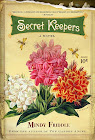
Mindy Friddle is founder and director of the Writing Room. Her novel, The Garden Angel (St.Martin’s Press/Picador), was a Barnes & Noble “Discover Great New Writers” selection. Her second novel, Secret Keepers, is forthcoming from St. Martin's Press in May.

Heather Magruder is a freelance writer, teaching artist and workshop facilitator. Her fiction has twice won the Piccolo Spoleto Fiction Open. She has presented writing and arts integration workshops across the country.

Writing Picture Books and Young Adult Novels

(Or… It’s a Cartoon Dog Eat Cartoon Dog World)

Melinda Long

If you always wanted to put that special children’s story your parents told you, or the one you made up for your own kids on paper, then this workshop is for you. Maybe you just enjoy the delightful story-telling qualities of a good picture book or young adult novel. Learn the basic skills and deeper complexities of writing a quality, marketable picture book or young adult novel and how to begin the publishing process. The emphasis of this course will involve picture books with a section of time spent on writing for young adults.

For beginning and intermediate writers

Six weeks, Tuesdays

Starts Tuesday, February 24

6:30 – 9 pm

Cost: $180; $170 Emrys members

Location: Innovate Building Conference Room, 148 River St. Greenville

Melinda Long is author of New York Times Bestsellers, How I Became a Pirate and Pirates Don’t Change Diapers.

Don’t Bother Me. I’m Reading.

Scott Gould

The first—and perhaps most important—step to becoming a decent writer is to become a decent reader. It’s one of the immutable laws of the literary universe: To excel at fiction you have to write a lot of words…and read a lot of words. In this course, we’ll concentrate on the reading part. We’ll read and examine amazing works of fiction, both classic and contemporary. And we’ll examine these works from a craft standpoint, allowing you to learn techniques that will ultimately inform your own fiction. But wait! Don’t order yet… because we’ll also provide weekly writing prompts, helping you generate ideas for future stories. The goal? To provide you with a solid, valuable reading foundation and a catalog of new story ideas.

Eight Weeks, Wednesdays

Starts Wed. Feb 25 [no class March 18]

6:30-9 pm

Location: Governor’s School for the Arts and Humanities, downtown Greenville

Cost: $240; $230 Emrys member

Scott Gould is Chair of the Creative Writing Department at the S.C. Governor’s School for the Arts & Humanities. His poetry, fiction and nonfiction have been published in magazines and anthologies including Kenyon Review, Kansas Quarterly, Carolina Quarterly, Black Warrior Review, New Stories From the South, and New Southern Harmonies, among others.

Seminar: Writing Your Novel

Mindy Friddle

How do you go about constructing a novel? Where do you start? How do you avoid getting bogged down in the middle? Some novelists balk at the idea of adhering to a framework, and don’t discover what happens in their novels until they’ve completed a draft. Others find following guidelines and rough outlines frees them up to focus on the flow of ideas. It’s helpful to discover which kind of writer you are. In this seminar, we’ll explore strategies not only for constructing a novel, but ways to navigate the immensity of such a long work. Using in-class writing exercises, samples from master writers, and discussion, you will be inspired and motivated to start—or finish-- your novel.

Note: Students are asked to bring along one favorite novel to the seminar. The novel can be of any kind—literary, contemporary, classic, mainstream, thriller, horror, young adult, romance—the only stipulation: a published novel you have read and count among your favorites.

One-day Seminar: Saturday, Feb. 28, 1-5 pm

Location: Vino 100 , Five Forks Promenade 2531 Woodruff Road Simpsonville, SC

Cost: $100; $95 Emrys members

Quality champagne and wine served throughout for $4-$6 a glass, and cheese platters available for purchase.

Mindy Friddle is founder and director of the Writing Room. Her novel, The Garden Angel (St.Martin’s Press/Picador), was a Barnes & Noble “Discover Great New Writers” selection. Her second novel, Secret Keepers, is forthcoming from St. Martin's Press in May.

Fiction in a Flash

Heather Magruder

The “short short” story of 250 to 1,000 words, or “flash fiction,” has a market. More and more contests and literary publications, both print and online, have shifted their focus to include (or focus exclusively upon) flash fiction. Over three sessions, we’ll explore ways to craft a full story in just a few hundred words. We’ll read excellent examples of flash fiction, generate our own writing, and explore ways to pare down the word count while ramping up the energy of our stories. Also covered: how and where to submit your own piece of flash for publication.

Three Weeks, Thursdays

April 16, 23, 30

6:30-8:30 pm

Location: Innovate Building Conference Room, 148 River St. Greenville

Cost: $90, $85 Emrys members

Heather Magruder is a freelance writer, teaching artist and workshop facilitator. Her fiction has twice won the Piccolo Spoleto Fiction Open. Heather is on the South Carolina Arts Commission’s Artist Roster, is listed on Southern Artistry and is currently enrolled in the MFA program at Queens University. She has presented writing and arts integration workshops across the country.

Monday, January 19, 2009

Can we talk about writing about talk...?

All the information you need can be given in dialogue.
- Elmore Leonard

I taught a seminar on Writing Dialogue for the Writing Room on Saturday. Preparing and leading a writing seminar on a craft element always turns out to be a big refresher course for me.

Here are a few notes from the seminar:
What is dialogue? Dialogue is conversation between two or more characters.
1. One mark of good written dialogue is that it is doing more than one thing at once:
• Advancing the plot
• Revealing character
• Providing “subtext”

Subtext
is what's not said but implied. Dialogue is often a mask for unexpressed feelings. Or even for lying. People frequently don't say what they mean. It makes for interesting dialogue if the reader knows that someone isn't saying what she means, or is lying. It creates tension.

2. What is not said is as revealing as what is said, especially regarding emotion. People in crisis are often at their least articulate. Think about it: The rhythm of speech changes according to our emotions. An angry person will be short and sharp. A person in love will be long and languid and dreamy.

3. As Francine Prose mentions in her book, Reading Like a Writer, dialogue in fiction is better than "real" dialogue. Fictional dialogue should be an improved, cleaned up, compressed, economical, and smoothed-out version of the way people talk. And yet, it should sound "natural."

4. Dialect is challenging and easy to overdo. "Dialect should always be achieved by word choice and syntax, and misspellings kept to a minimum. They distract and slow the reader, and worse, they tend to make the character seem stupid rather than regional." --Burroway, WRITING FICTION

Good examples of dialect (where syntax makes dialect clear): "Don't rush me none."
"Run up yonder and tell her."
Bad example: "Doan rush me nun, Ah be gwine." (caricature)
Ron Rash (ONE FOOT IN EDEN), Richard Price (LUSH LIFE) and Annie Proulx ("Brokeback Mountain") are writers who are masters of dialect.

5. A few ways to improve your dialogue writing skills:
Eavesdrop. Start paying close attention to people’s conversations in public places. Write down snippets or intriguing lines in a journal.
Read your dialogue aloud "to make sure it is comfortable to the mouth, the breath, and the ear. If not, then it won't ring true as talk." --Burroway, WRITING FICTION.
Also, have people read your dialogue to you. You’ll be able to hear the rhythm and cadence of the sentences, how easy it is to pronounce the words and syllables, how long each character’s dialogue is.
Keep Practicing. The best way to improve dialogue writing skills is to read it (you’ll learn to spot and pay attention to authors who are good at writing dialogue) and to write more dialogue. The more you practice writing it, the more you’ll come to understand the cadence, rhythm and timing of natural-sounding dialogue.

Oh, and Happy MLK Day everyone.

Thursday, December 18, 2008

The Writing Room: January Classes


The Writing Room is a program we started here in Upstate SC offering classes to writers of all levels. It's sponsored by the nonprofit Emrys Foundation. January's offerings include a seminar on dialogue by yours truly and a 9-week advanced class, taught by novelist Ashley Warlick, for folks who have a manuscript. Here's a link for more information.

SEMINARS AND WORKSHOPS, WINTER 2009

Writing Dialogue
with Mindy Friddle

When dialogue in fiction and creative nonfiction is working, it helps to create rich, believable characters and drives the story forward. So how do you write believable dialogue? When should we hear a character speak? And how might dialogue be used to complicate a character or story? In this seminar, we'll examine dialogue in several fiction and nonfiction pieces. We'll discuss how to create conversations between characters that sound spontaneous and lifelike--not monotonous. Participants will be invited to do in-class writing exercises designed to help write sharper, richer dialogue that rings true, reveals character, creates tension, and adds depth through subtext. This is designed to be a fun, informal seminar for writers at all levels who are looking for fresh approaches to writing dialogue.

Level: All levels, Beginner to Advanced
Saturday, January 17
2:00- 4:00 pm
Location: Innovate Building Conference Room, 148 River Street, Greenville, SC
Fee: $25; $20 Emrys member

Works in Progress: Focusing on Your Book Length Manuscript
with Ashley Warlick

This popular class is for experienced writers with a book-length manuscript of either fiction or nonfiction in progress. Each student will submit 40 to 50 pages of their work to be closely read and carefully considered by both the instructor and the group, providing the center of one full class period's workshop. Through constructive, frank critique, both given and received, students will learn to identify and address what works in a manuscript and what does not. Expect to come away from the class with specific reading assignments and concrete recommendations on how to improve your novel, memoir, or collection.

Level: Advanced
This workshop may be taken more then once.
9-week class, 3 hours each class,
Starts January 20
Tuesdays,6:00 - 9:00 p.m.
Location:Furman University, Modern Languages Department
Fee: $360; $340 Emrys member
Class size limited to 8 people.
Registration [and the waiting list] for this class closes January 16.


Seminars and Workshops, Spring 2009
[To be announced soon]

Saturday, November 29, 2008

A Writing Room Success


Shivers of anticipation for a local writer and friend, John Jeter, whose first published novel, THE PLUNDER ROOM, will be in stores in January.

The co-owner of The Handlebar, a phenomenal concert hall, John was one of the first to sign up for the Writing Room, our local program for Upstate writers, sponsored by the Emrys Foundation.

He took Ashley Warlick's advanced fiction workshop, and met with success.
Here's more about the book from John's blog, along with blurbs from Ashley, Karin Gilliespie, and Ron Rash, and the story behind the book.

Tuesday, August 12, 2008

The Writing Room's New Schedule


The Writing Room's Fall 2008 schedule of workshops and seminars is up, and registration is running. Visit the website, www.emrys.org for details. (Emrys, a nonprofit arts foundation, sponsors our classes.) Curious? Read our students' testimonials.

Also visit us on Facebook.

We're kicking things off with a seminar from fabulous, hilarious, bestselling novelist Joshilyn Jackson:

Marketing Yourself on the Web at ALL stages of your Writing Career

Joshilyn Jackson

Whether you have just begun to draft your first short story or are currently shopping your third completed manuscript, there are things you could be doing, right now, to build a reader base and create a web presence. As writers we like to think of ourselves as artists, but in the publishing world, we are expected more and more to act as our own publicists and be savvy businessfolk. The Internet has opened up the world to anyone with a modem, and it can be a powerful professional tool for writers at all stages of their career. While the main focus of this seminar is prepublication (especially preparing for submission before one's first book first sale), we will also spend a little time on the crucial period between sale and publication. This seminar is for fiction and non-fiction writers, focusing mainly on those interested in placing book length manuscripts.

Level: All levels, Beginner to Advanced
Saturday, August 24
2:00-
5:00 pm
Location: Innovate Building Conference Room,
148 River Street, Greenville, SC
Fee: $50; $45 Emrys member

Joshilyn Jackson’s bestselling debut novel, gods in Alabama won the SIBA (Southern Independent Booksellers Alliance’s) 2005 Novel of the year Award and was a #1 BookSense pick. Her second novel, Between, Georgia was also a #1 BookSense pick, making Jackson the first author in BookSense history to receive #1 status in back to back years. Jackson read the audio version herself, winning a Listen Up award from Publisher's Weekly and making Audiofile's Best of 2006 list. Both books were chosen for the Books-A-Million Book Club. Her short fiction has been published in literary magazines and anthologies including TriQuarterly and Calyx, and her plays have been produced in Atlanta and Chicago. Joshilyn’s third novel, The Girl Who Stopped Swimming, a national bestseller, was released in March of 2008. Visit www.joshilynjackson.com and Joshilyn’s popular blog, Faster Than Kudzu, for more information.


eXTReMe Tracker